
If you’re trying to figure out how to stop a cat from scratching the couch, you’re not alone. Many cat owners deal with the same problem: the sofa becomes the cat’s favorite scratching spot, the fabric gets damaged fast, and saying “no” never seems to work for long.
The frustrating part is that couch scratching is not simply bad behavior. For cats, scratching is a normal instinct tied to stretching, claw maintenance, scent marking, and stress relief.
That means the best answer to how to stop a cat from scratching the couch is not just correction. It is making the couch less rewarding while giving your cat a better scratching option nearby.
The good news is that you usually do not need one dramatic fix. In many homes, a few practical changes in texture, placement, and routine are enough to reduce sofa scratching and protect the furniture. Below are 9 realistic fixes that actually help.
Why your cat keeps scratching the couch
Before you can solve the problem, it helps to understand why your cat keeps choosing the
sofa.
Cats scratch for several reasons:
✔ to stretch their body and shoulders
✔ to remove the outer layer of their claws
✔ to mark territory with scent glands in their paws
✔ to release stress or extra energy
✔ because the couch texture feels satisfying
That last point matters more than many owners realize. Some fabrics give cats just the right amount of resistance, which makes the couch more appealing than a random scratching post. If your sofa material seems to be part of the problem, it may help to compare which fabrics hold up better in pet homes. I covered that in Best Fabrics for Pet Owners: 7 Couch Materials That Resist Hair and Scratches.
How to stop a cat from scratching the couch: 9 fixes that actually help
1) Put a scratching post right next to the couch
If you want to learn how to stop a cat from scratching the couch, start with the simplest fix first: place a scratching post directly beside the exact spot your cat already scratches.
This is where many owners accidentally make things harder. They buy a scratching post, put it in another room, and hope the cat will switch on its own. Most cats will not. If the couch is already the preferred scratching spot, the replacement has to be close enough to compete with it.
A scratching post hidden in a corner may look neat, but it often fails because it is too far away from the habit zone. In the beginning, convenience matters more than appearance.
2) Match the scratching surface your cat actually likes
Not all cats want the same kind of scratching surface. Some like sisal rope, some prefer cardboard, and others go for carpet-like material or horizontal scratch pads. If your cat ignores one scratcher, that does not mean they dislike scratching posts in general. It often means the texture or shape is wrong.
Watch how your cat scratches the couch:
✔ If they stretch upward against the arm, try a tall vertical post.
✔ If they scratch lower areas or edges, try a horizontal scratcher.
✔ If they go after corners, try a corner-style scratcher or furniture-mounted option.
The more similar the approved scratcher feels to the couch scratching experience, the easier it is to redirect the habit.
3) Make the couch less rewarding to scratch
A big part of how to stop a cat from scratching the couch is making the sofa feel less satisfying. You do not have to ruin the look of your living room, but temporary barriers can make a real difference.
Some common options include:
✔ a tightly tucked throw blanket over the scratching zone
✔ a couch cover with a smoother texture
✔ double-sided furniture tape made for cats
✔ couch corner protectors or scratch guards
The goal is not to punish your cat. It is simply to lower the reward of scratching the sofa while increasing the appeal of the approved scratching surface nearby.
If you are thinking about using a cover as part of the solution, it helps to know which features actually matter in a pet home. I broke that down in Best Washable Couch Covers for Pet Owners: 7 Features to Look For Before You Buy.
4) Reward the replacement behavior immediately
If your cat uses the scratching post, reward it right away. That reward can be a treat, praise, petting, or a short play session depending on what motivates your cat most.
Timing matters here. If the reward comes too late, your cat may not connect it to the scratching behavior you want. In the early stage, even a few well-timed rewards can help build a new habit much faster.
If the couch feels fun and the scratcher feels boring, the couch will keep winning. If the scratching post starts leading to good things, the balance shifts.
5) Trim your cat’s nails regularly
Nail trimming will not completely solve the problem, but it can reduce the amount of couch damage while you work on the habit. Shorter claws are less likely to snag deeply into woven fabric or pull threads out of the sofa.
If your cat hates nail trims, keep it simple. One or two nails at a time is better than turning the whole process into a stressful struggle. This step is not the full answer to how to stop a cat from scratching the couch, but it does reduce the damage while the behavior is being redirected.
6) Add daily playtime to reduce stress and boredom
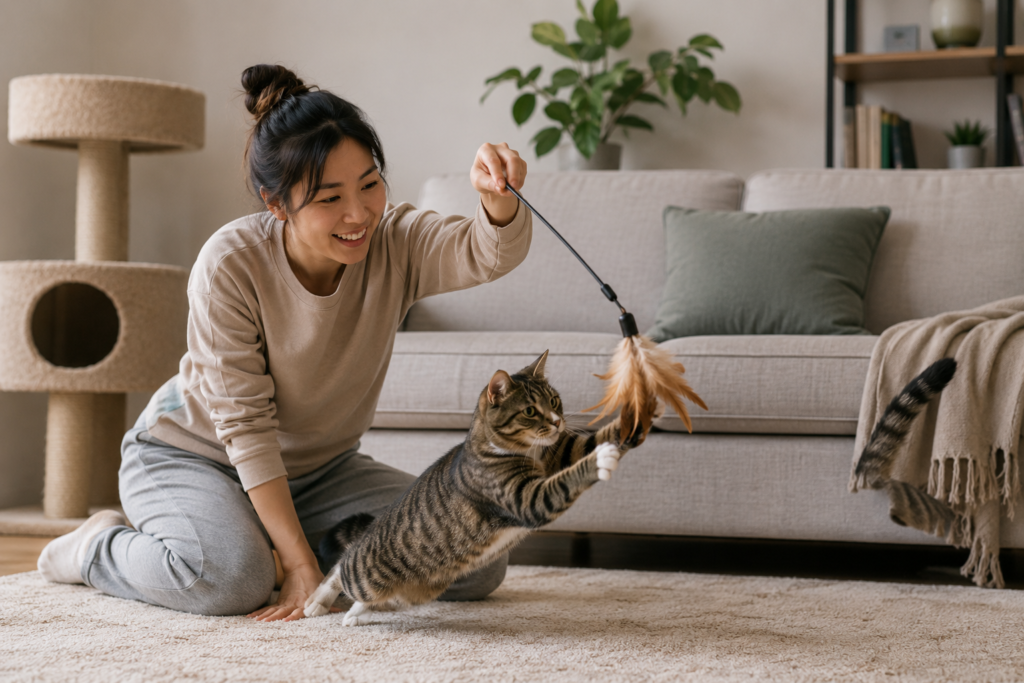
Some cats scratch the couch more when they are under-stimulated, frustrated, or full of energy. If the scratching happens around the same time each day, especially in the evening, boredom may be part of the problem.
A short play session with a wand toy, chase toy, or food puzzle can help reduce the urge to release energy through destructive scratching. Even 10 to 15 minutes of focused play can make a difference.
For some cats, scratching is not just about claws. It is also about energy, routine, and stress relief.
7) Be careful not to reward couch scratching with attention
Cats are excellent at repeating behaviors that reliably get a response. If your cat scratches the couch and you immediately rush over, speak loudly, or interact every single time, the behavior may also be getting reinforced by attention.
This does not mean you should ignore major damage. It means you should avoid turning couch scratching into a dramatic event. Instead of reacting loudly, calmly redirect your cat to the scratching post and reward the post.
Sometimes the fastest way to change the pattern is to make the correct option more rewarding than the wrong one.
8) Protect the exact couch zones your cat targets most
Most cats do not scratch the entire sofa evenly. They usually focus on one or two places,
such as:
✔ the front corner
✔ the arm
✔ the lower side panel
✔ the back edge
Instead of trying to protect the whole couch at once, start with the exact area your cat keeps targeting. This makes the solution cheaper, simpler, and more realistic.
A couch corner protector, throw blanket, or furniture shield over one high-risk zone is often more effective than trying to redesign the whole room at once.
If you want broader furniture protection ideas beyond scratching alone, including fur, dirt, and everyday wear, you can also read Protect Couch from Dogs and Cats: 9 Solutions That Actually Work.
9) Stay consistent long enough for the habit to change
This is the part many owners underestimate. If your cat has been scratching the couch for months, one new scratching post will not erase the habit overnight. Most successful changes come from repeating the same setup long enough for the new behavior to stick:
✔ approved scratching surface beside the couch
✔ couch texture made less rewarding
✔ calm redirection
✔ rewards for using the right scratching spot
✔ enough time for the new routine to become familiar
Some cats improve quickly. Others need a few weeks before the sofa stops being their first choice. If you are serious about how to stop a cat from scratching the couch, consistency matters more than one perfect product.
What Usually Does Not Work When You’re Trying to Stop Couch Scratching
When people search for how to stop a cat from scratching the couch, they often try the most obvious reaction first: scolding, pushing the cat away, or buying one random scratching post and hoping the problem disappears.
That usually does not work well on its own.
Here are a few common mistakes:
✔ scolding without offering a better scratching option
✔ placing the scratching post too far from the couch
✔ choosing a scratcher based on appearance instead of your cat’s scratching style
✔ giving up after a few days because the cat still goes back to the sofa
✔ protecting the couch but doing nothing to reduce stress or boredom
The goal is not to stop scratching completely. The goal is to move scratching to a surface you can live with.
A Simple Weekly Plan to Stop Your Cat from Scratching the Couch
If you want a realistic place to start this week, keep it simple:
✔ place a scratching post or pad directly beside the couch
✔ cover the scratched area with a throw, protector, or smoother barrier
✔ reward your cat every time they use the approved scratching surface
✔ trim nails if needed to reduce fabric damage
✔ add short daily play sessions if boredom seems to be part of the problem
This may not feel like the fastest hack, but it is one of the most practical ways to reduce couch scratching without making your cat more stressed.
Final Thoughts on How to Stop a Cat from Scratching the Couch
Learning how to stop a cat from scratching the couch is usually less about punishment and more about setup. Cats scratch because it feels natural and rewarding, so the most effective solution is to make the couch less appealing while giving your cat a scratching option that feels even better.
You do not need all 9 fixes at once. In many homes, the combination of a well-placed scratching post, a temporary couch barrier, and consistent rewards is enough to start shifting the habit. If your cat has been targeting the same sofa for a long time, expect some trial and error, but stay with it. Small changes repeated consistently usually work better than one dramatic solution.