
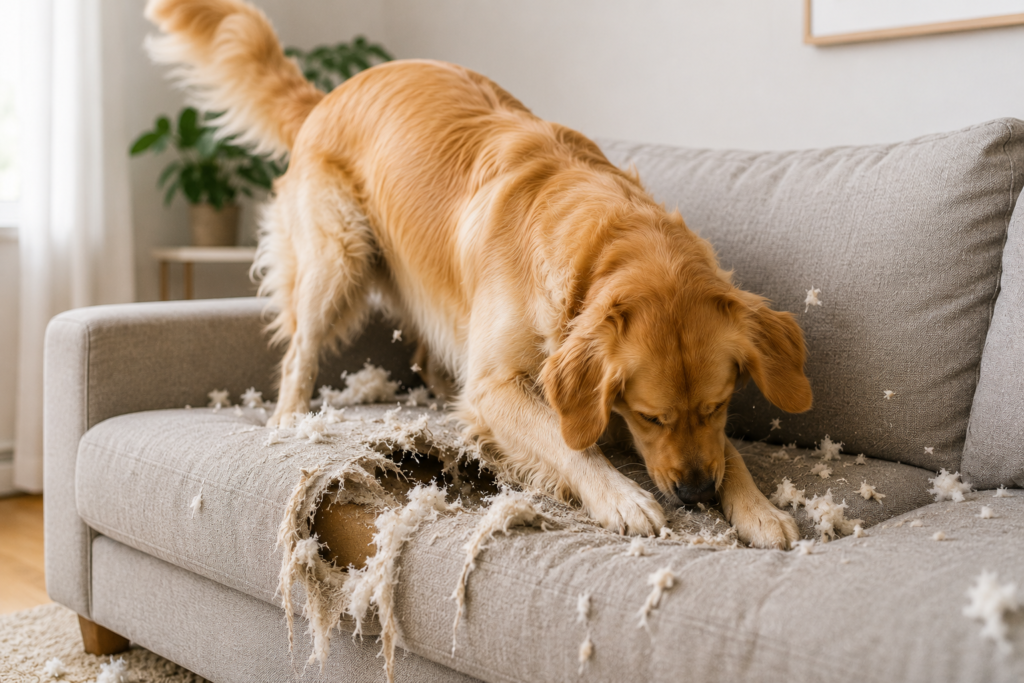
Why does my dog dig at the couch? If you’ve ever walked into your living room and found your dog scratching, pawing, or digging at the sofa cushions, you’re not alone.
Many pet owners become frustrated when their dogs repeatedly dig at furniture, especially when expensive couches begin to show signs of wear and damage. The good news is that couch digging is usually a normal behavior rather than a sign of a serious problem.
Understanding why your dog digs at the couch can help you protect your furniture while addressing the underlying cause of the behavior.
In this guide, we’ll explore seven common reasons behind couch digging and practical solutions that can help stop the behavior while keeping your dog comfortable and happy.
Why Does My Dog Dig at the Couch? Is It Normal?
Yes, in most cases, couch digging is completely normal.
Dogs have inherited many behaviors from their wild ancestors. Before lying down, wild dogs often scratched and dug at the ground to create a comfortable resting spot. Even though your dog now lives indoors, those instincts can still appear when they settle onto a couch or bed.
However, excessive digging may also indicate boredom, anxiety, excess energy, or a need for additional stimulation.
The key is identifying what motivates your dog’s behavior.
1. Your Dog Is Following Natural Nesting Instincts
One of the most common reasons dogs dig at couches is nesting behavior.
In the wild, canines would dig into leaves, dirt, or grass before resting. This behavior helped create a comfortable sleeping area and offered protection from the environment.
Modern couches, blankets, and cushions can trigger the same instinct.
Signs of Nesting Behavior
✅ Digging occurs before lying down
✅ Your dog circles repeatedly
✅ The behavior lasts only a few seconds
✅ Your dog quickly settles afterward
How to Reduce It
You may not be able to eliminate nesting behavior entirely, but you can redirect it.
Consider providing:
✅ Soft blankets
✅ Dedicated dog beds
✅ Comfortable resting areas
Many owners asking “why does my dog dig at the couch” are actually observing a normal nesting instinct rather than a behavioral problem.
For additional furniture protection strategies, check out our guide on Protect Couch from Dogs and Cats: 9 Solutions That Actually Work.
2. Your Dog Has Excess Energy
Many dogs simply aren’t getting enough exercise.
When dogs have extra energy, they often create their own entertainment. Digging at furniture can become a way to release frustration and burn off excess energy indoors.
This is especially common among:
✅ Border Collies
✅ Australian Shepherds
✅ Huskies
✅ Labrador Retrievers
✅ Young dogs under two years old
How to Stop It
Increase daily activity through:
✅ Longer walks
✅ Fetch sessions
✅ Puzzle toys
✅ Training exercises
Mental stimulation can be just as effective as physical exercise.
A tired dog is usually far less interested in digging furniture.
If your dog digs at the couch every day, insufficient exercise may be contributing to the behavior.
3. Your Dog Is Bored
Boredom is one of the leading causes of destructive behaviors in dogs.
If your dog spends long hours alone, the couch may become a target simply because it is available.
Some dogs discover that scratching cushions creates movement, sounds, and excitement, making the behavior rewarding.
Signs of Boredom
✅ Digging when left alone
✅ Chewing furniture
✅ Excessive barking
✅ Restlessness indoors
Solutions
Try rotating toys every few days rather than leaving them out permanently.
You can also provide:
✅ Food puzzles
✅ Snuffle mats
✅ Frozen treats
✅ Interactive toys
Keeping your dog mentally engaged can significantly reduce unwanted digging.
Boredom is one of the most common answers to the question, “why does my dog dig at the couch when I’m not home?”
4. Your Dog Smells Something Interesting
Dogs experience the world primarily through scent.
Your couch may contain odors from:
✅ Food crumbs
✅ Other pets
✅ Family members
✅ Outdoor smells carried indoors
Sometimes dogs dig because they believe something interesting is hidden inside the cushions.
How to Fix It
Regular cleaning can help eliminate scent triggers.
You may also benefit from reading Why Your Home Smells Like Pets: 7 Hidden Causes and How to Fix Them, which explains how lingering odors can affect both your home environment and your pet’s behavior.
A cleaner couch often reduces digging attempts.
5. Separation Anxiety or Stress
Some dogs dig at furniture when they feel anxious.
Dogs experiencing separation anxiety often engage in repetitive behaviors to cope with stress.
These behaviors may include:
✅ Couch digging
✅ Barking
✅ Whining
✅ Pacing
✅ Destructive chewing
Signs Anxiety May Be the Cause
✅ Digging occurs mainly when you’re leaving
✅ Your dog follows you constantly
✅ Accidents happen indoors
✅ The behavior seems obsessive
What You Can Do
Start with:
✅ Short departures
✅ Calm arrivals and exits
✅ Safe resting spaces
✅ Consistent routines
If anxiety is severe, consult a veterinarian or professional dog behavior specialist.
6. Your Dog Wants Attention
Dogs quickly learn which behaviors get reactions from their owners.
If digging at the couch causes you to:
✅ Talk to them
✅ Chase them
✅ Scold them
✅ Interact with them
Then the behavior may actually be rewarded.
From your dog’s perspective, negative attention is often better than no attention at all.
How to Handle It
Instead of reacting dramatically:
✅ Redirect your dog to an appropriate activity
✅ Reward calm behavior
✅ Provide attention before problem behaviors begin
Consistency is critical.
Every family member should respond the same way.
7. The Couch Is Simply Comfortable
Sometimes the explanation is surprisingly simple.
Your couch may be:
✅ Softer than your dog’s bed
✅ Warmer
✅ Better positioned near family members
✅ Covered with appealing blankets
Many dogs dig to adjust cushions and create the perfect sleeping spot.
Consider Upgrading Their Resting Area
A high-quality dog bed may reduce couch digging significantly.
Look for:
✅ Orthopedic support
✅ Washable covers
✅ Plush surfaces
✅ Proper sizing
You can also place a blanket on the couch specifically for your dog.
For additional protection, read Best Washable Couch Covers for Pet Owners: 7 Features to Look For Before You Buy.
How to Protect Your Couch While Training Your Dog
Behavior change takes time.
While you’re working on reducing couch digging, protecting your furniture is a smart strategy.
Washable Couch Covers
Washable covers help prevent scratches, dirt buildup, and everyday wear.
For more information, read Best Washable Couch Covers for Pet Owners: 7 Features to Look For Before You Buy.
Pet Blankets
Protective blankets help shield furniture while giving dogs a designated resting area.
Learn more in Best Pet Blankets for Furniture Protection: What Pet Owners Should Know.
Regular Hair Removal
Dogs that spend time on furniture often leave behind large amounts of fur.
You may also find these guides helpful:
How to Remove Pet Hair from a Couch: 7 Easy Methods That Actually Work
Reusable Pet Hair Remover vs Lint Roller: Which Is Better for Removing Pet Hair?
Common Mistakes Pet Owners Make
Punishing the Behavior
Punishment often creates confusion and anxiety.
Positive reinforcement usually works far better than punishment.
Ignoring Exercise Needs
No amount of training can replace adequate physical activity.
Dogs need both physical and mental stimulation every day.
Inconsistent Rules
Allowing couch access one day and forbidding it the next can confuse your dog.
Establish clear household rules and follow them consistently.
Expecting Immediate Results
Behavior change takes time.
Focus on gradual improvement rather than instant perfection.
Final Thoughts
If you’re still wondering, “why does my dog dig at the couch,” remember that the behavior is usually linked to a specific need or instinct rather than deliberate disobedience.
In most cases, couch digging is connected to nesting instincts, boredom, excess energy, scent investigation, anxiety, attention-seeking, or simply a desire to become more comfortable.
By identifying the underlying cause, providing appropriate exercise and mental stimulation, and using furniture protection strategies, you can significantly reduce the behavior without creating stress for your dog.
A little patience goes a long way—and your couch will thank you for it.
Related Articles
👉 Protect Couch from Dogs and Cats: 9 Solutions That Actually Work
👉 Best Washable Couch Covers for Pet Owners: 7 Features to Look For Before You Buy
👉 Best Pet Blankets for Furniture Protection: What Pet Owners Should Know
👉 How to Remove Pet Hair from a Couch: 7 Easy Methods That Actually Work
👉 Reusable Pet Hair Remover vs Lint Roller: Which Is Better for Removing Pet Hair?
👉 Why Your Home Smells Like Pets: 7 Hidden Causes and How to Fix Them